THE CHIMPANZEE
STOP THE MISCONCEPTIONS
Humans evolved from apes
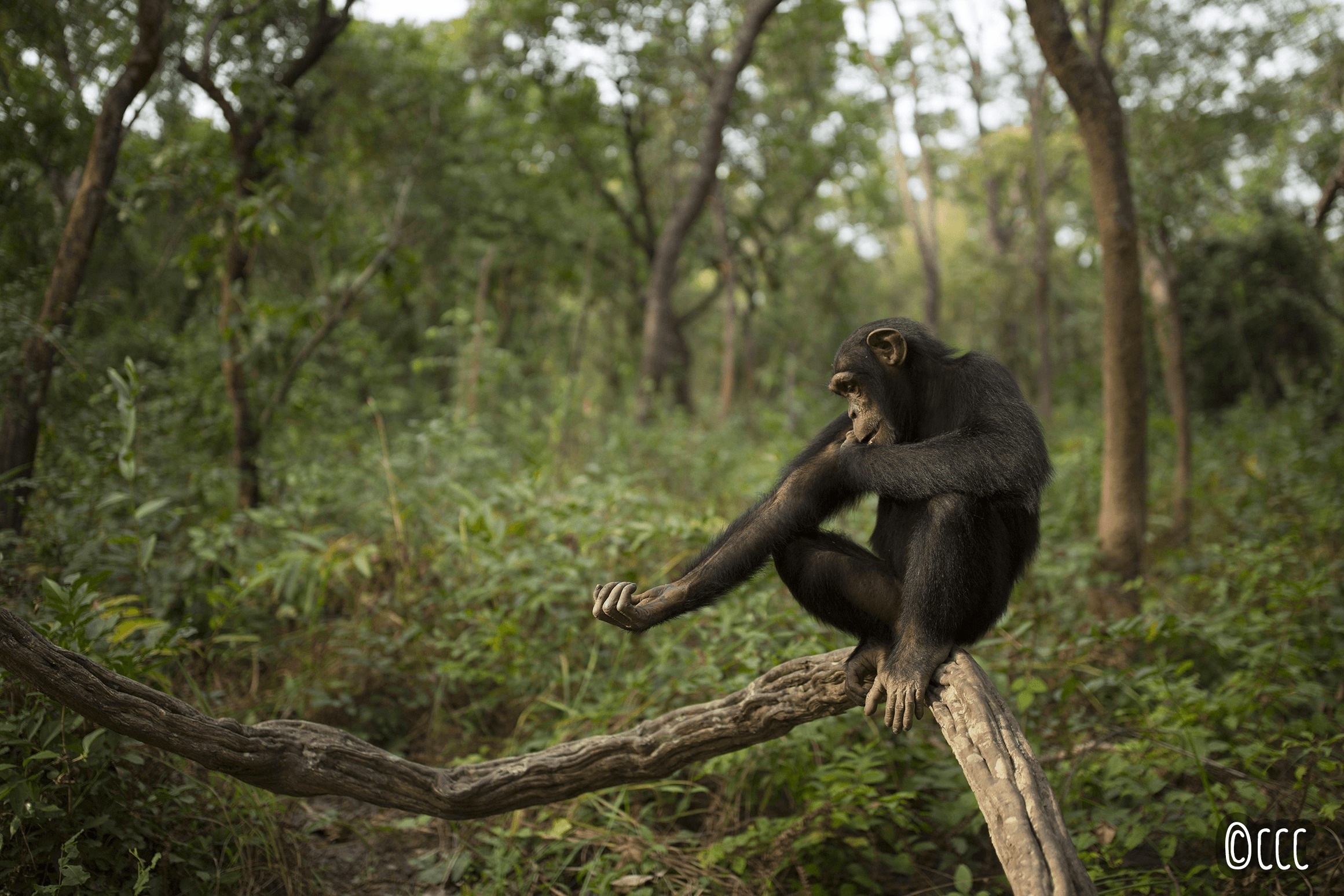
Contrary to what was long believed, humans are not an evolution of apes. We are part of the large primate family. More specifically, humans belong to the Hominidae family, along with bonobos, gorillas, orangutans and chimpanzees!
Some species within this family are genetically very close. Humans and chimpanzees share at least 98.4% of their DNA, making chimpanzees one of our closest relatives.
Humans are primates
NATURAL HABITAT
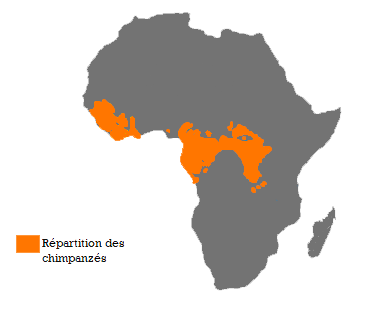
Wild chimpanzees are present on the African continent, particularly in Central Africa.
They are found in the large equatorial rainforests and African savannahs of the continent.
ECOLOGY
Chimpanzees are great lovers of edible leaves, insects, seeds, fruits and even sometimes small hunted mammals – making them omnivorous.
A chimpanzee has a lifespan of about 50 years in the wild and in captivity, a chimpanzee can live up to 60 years. As an adult, a male chimpanzee can weigh up to 70 kg and measure 1m20 in the bipedal position, i.e. standing on his own two feet.
The growth period of a chimpanzee is long, almost comparable to humans’. An individual is mature and completes its development at around 13-15 years of age.
A female gives birth about every 5 years. Her gestation period is 8.5 months and she nurses and cares for her youngster for 4-5 years. During this time, the baby remains very close to its mother.
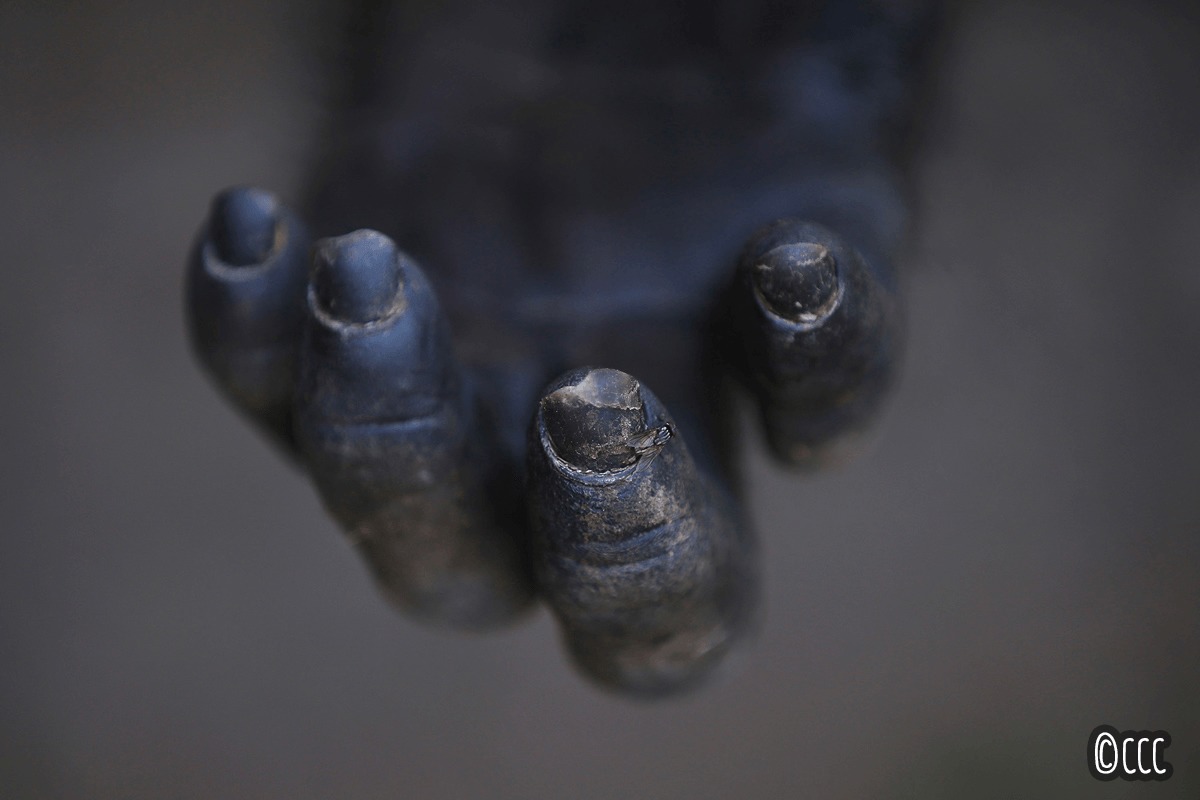
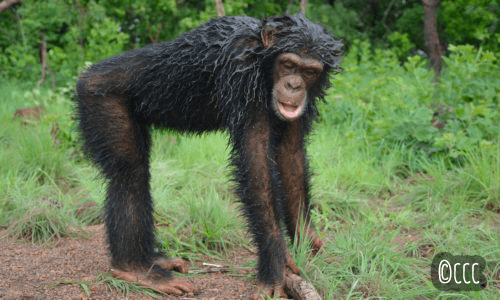
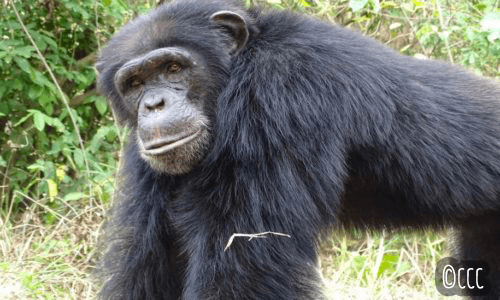
Like humans, chimpanzees have opposable thumbs, not only on their hands, but also on their feet. Their gait is most often on all four limbs, but they are also able to walk in the bipedal position for short distances.
SOCIAL BEINGS
Chimpanzees live in groups that can range from a dozen individuals to sometimes a hundred, under the direction of one dominant male.
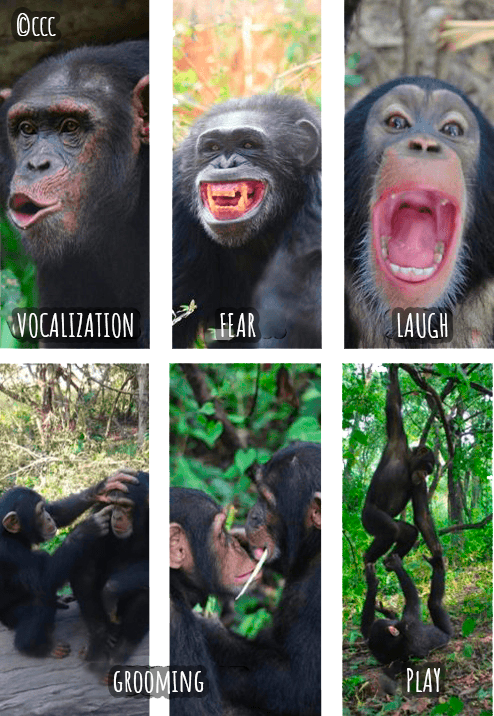
They communicate with each other often and in a form very similar to that of humans. They kiss, hug, pat each other on the back, touch hands, tickle each other… They even laugh while playing! They communicate as well with vocalizations and even with facial expressions.
Chimpanzees practice what is commonly known as delousing: they regularly groom each other, which helps build relationships within the community and eases tensions between individuals. So, they are not looking for lice!
If chimpanzees are so similar to humans, why can’t they talk?
It all comes down to the larynx at the back of the throat. Their morphologies are not the same and this organ is involved in speech.
IMORTANCE FOR THE FORESTS
Chimpanzees play an important role in the protection of the forest: because of their long lifespan, their long journeys (several kilometres a day) and their consumption of fruits, they ensure the dissemination of seeds which is essential for the regeneration of the forest, as well as indispensable natural pruning.
If the chimpanzees disappear, the entire ecosystem of a forest will be endangered. Unfortunately, today, chimpanzees, like other great apes, are threatened by extinction.